Walk down any grocery aisle and it hits you fast. Chips promise 20 grams. Cookies flex their macros. Water somehow contains protein now.
The protein marketing trend is everywhere – and if you run marketing for a food, beverage, wellness, or retail brand, you cannot ignore it.
You see it in Super Bowl ads, convenience store fridges, TikTok recipes, and fitness memes. Protein has moved from niche bodybuilding culture into the center of mainstream lifestyle branding. It is now a primary driver of how brands communicate value.
The question is not whether it is real. The question is how you respond to it in a way that drives sales without burning trust. Because food trends come and go – but this one has structural staying power, and the brands that understand why will outlast the ones chasing the label.
Table of Contents
Why Protein Suddenly Became the Star Nutrient
This obsession did not come out of nowhere. It has been quietly building for years across health guidelines, diet culture, social platforms, and product innovation. At some point, all those streams converged.
From a pure nutrition standpoint, the story is fairly straightforward. Official US dietary guidelines suggest most adults should land between 0.36 and 0.6 grams of protein per pound of body weight – roughly 50 to 100 grams a day, or about 10 to 35 percent of total calories. Most omnivores already hit that range without thinking about it.
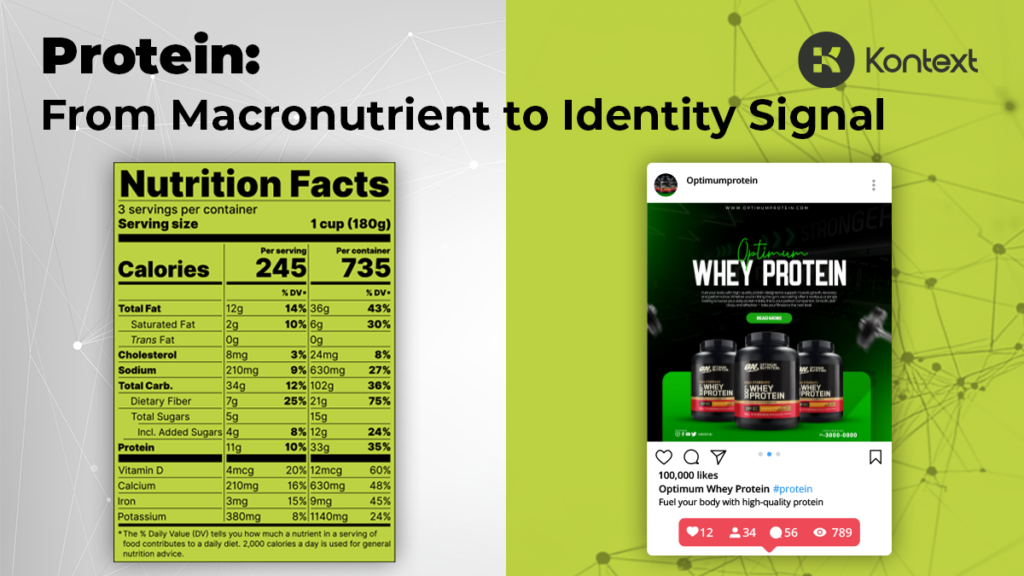
Yet in people’s minds, protein is no longer just a macronutrient. It has become a health badge and an identity signal. Consumers increasingly treat it as the primary metric for good nutrition — which is a marketing shift, not a science shift.
The Demand Spike Brands Cannot Ignore
If you feel like more shoppers are hunting for protein on labels, you are not imagining things.
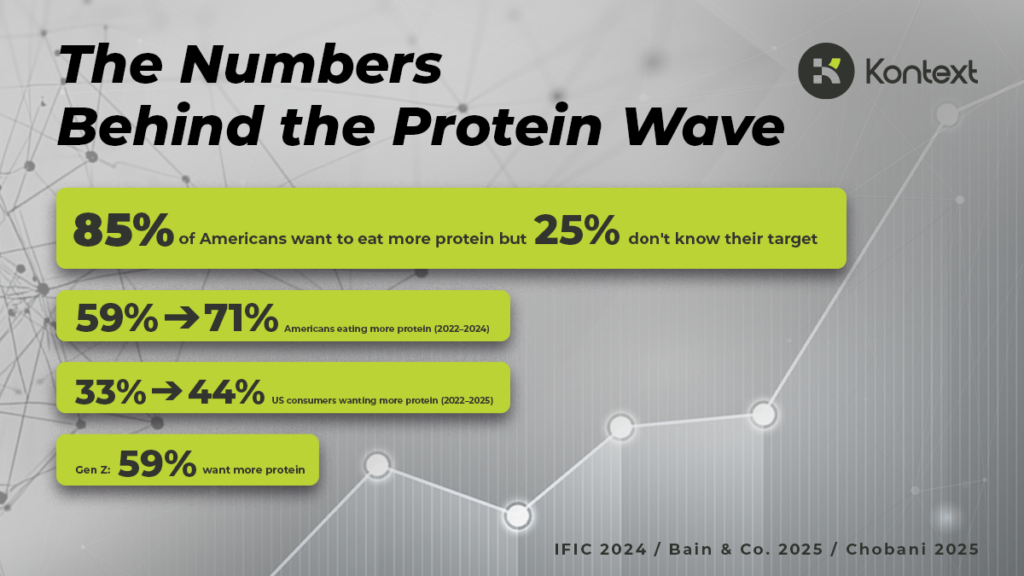
A 2024 trends report from the International Food Information Council found that the share of Americans actively trying to eat more protein climbed from 59 percent in 2022 to 71 percent in 2024. Bain and Company tracked the same rise: US consumers wanting a protein increase jumped from 33 percent in mid-2022 to 44 percent in 2025. Among Gen Z, that number sits at around 59 percent.
Chobani’s 2025 consumer survey found 85 percent of Americans want to consume more protein — while more than a quarter admitted they do not know how much they should actually target.
That last detail matters more than it looks. Consumers are not responding to science. They are responding to a story. Understanding that distinction is the difference between building lasting brand equity and chasing a buzzword.
On the market side, the numbers are hard to ignore. Consulting firm Towards FnB projects the high-protein food market will grow from $56.69 billion in 2025 to $117.44 billion by 2034. When investors see that kind of headroom, this is not a passing health craze.
What Is Actually Fueling the Protein Marketing Trend
Several forces are running in parallel — and your customers sit exactly where they overlap.
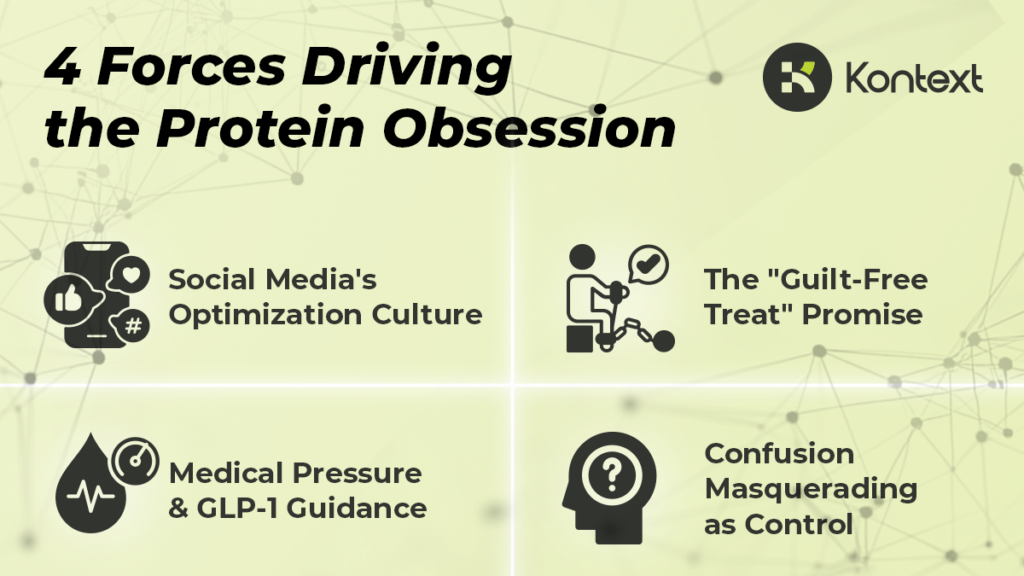
1. Social Media’s Optimization Culture
Scroll through TikTok or Reels and the pattern is immediately visible. “What I eat in a day.” “How I hit 120 grams of protein.” Everything is framed as optimization.
Cargill’s 2025 protein profile report found that 25 percent of people describe websites and social media as key influences on what they eat. For Gen Z, 61 percent say influencer advice plays into their diet decisions.
That means your pack copy is now in direct competition with creators blending cottage cheese and calling it a “high protein hack.” This creates real pressure for brands trying to maintain strategic consistency rather than just chasing viral speed.
2. The “Guilt-Free Treat” Promise
Many consumers still want an afternoon snack or something late at night. That desire did not disappear because of wellness trends. What protein language does is give those consumers a story that makes the treat feel deliberate rather than indulgent.
Protein bars replace candy bars. Protein ice cream becomes a macro-friendly dessert. Brands like Quest lean hard into the “have your sweet and your macros too” frame — and it works, because it resolves a psychological tension consumers already feel.
People do not always believe these products are as healthy as whole food. But they feel better reaching for them. That is enough to drive genuine category share shifts.
3. Medical Pressure and GLP-1 Guidance
As weight loss medications become more mainstream, more patients hear a consistent message from providers: keep your protein up to preserve muscle mass while losing weight. Surveys of GLP-1 users show that many start reading nutrition labels more carefully once on the medication.
Many then go looking specifically for products that prominently display protein grams. Health stories that spread through wellness media quietly normalize protein-focused purchasing for everyone else too.
4. Confusion Masquerading as Control
Here is the part nobody likes to say out loud: people are confused. Most are trying to “eat better” but lack confidence in how to actually do it.
Protein is simple to track. You look for a number. Higher feels better. This simplicity is precisely why the story spread so fast — it gives consumers a sense of control in a space that is otherwise overwhelming.
Marketers do not need everyone to understand the biochemistry. They only need a clear, sticky belief. High protein is good. High protein helps goals. That belief shows up directly in cart data.
Where the Science and the Hype Start to Clash
Here is the part that matters for your brand’s long-term credibility.
While many consumers feel they are not eating enough protein, research does not point to a population-level protein shortage. A review published in ISRN Nutrition linked very high protein intake over time with potential risks — kidney stress, certain cancers, cardiovascular pressure — particularly when driven by animal sources that also carry high saturated fat loads.
Protein supplements add another layer of complexity. A Consumer Reports investigation found concerning heavy metal levels in some powders and shakes — products framed as “clean fuel.” When that surfaces, trust collapses fast.
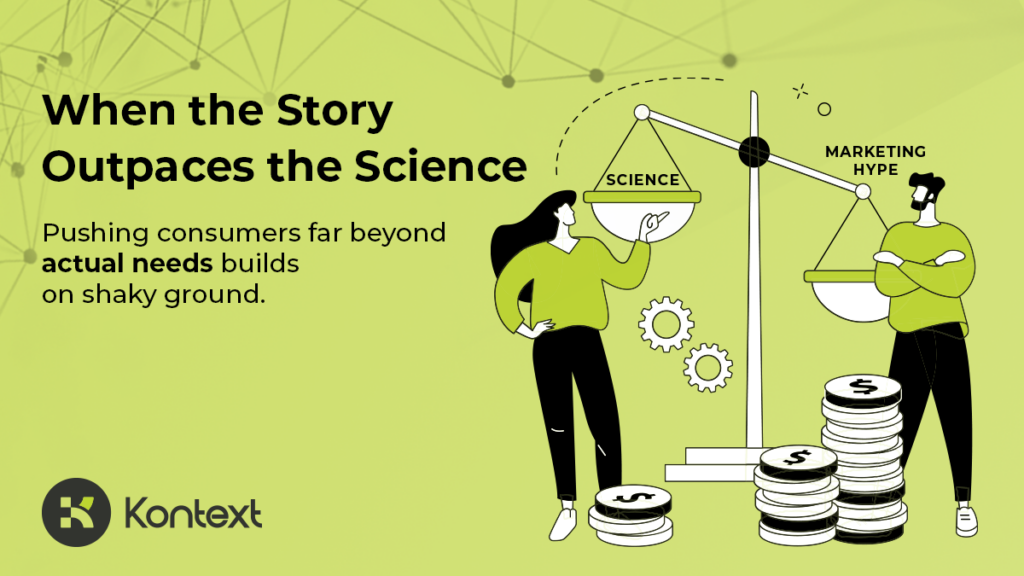
This does not mean protein claims are dangerous. It means brands that overstate benefits or push consumers well beyond their actual needs are building on shaky ground. The market leader who is still standing when the trend matures will be the one who told the truth while the competition chased hype.
How the Protein Marketing Trend Shows Up on Shelves
Right now, two broad strategies dominate.
Reframing What Was Already There
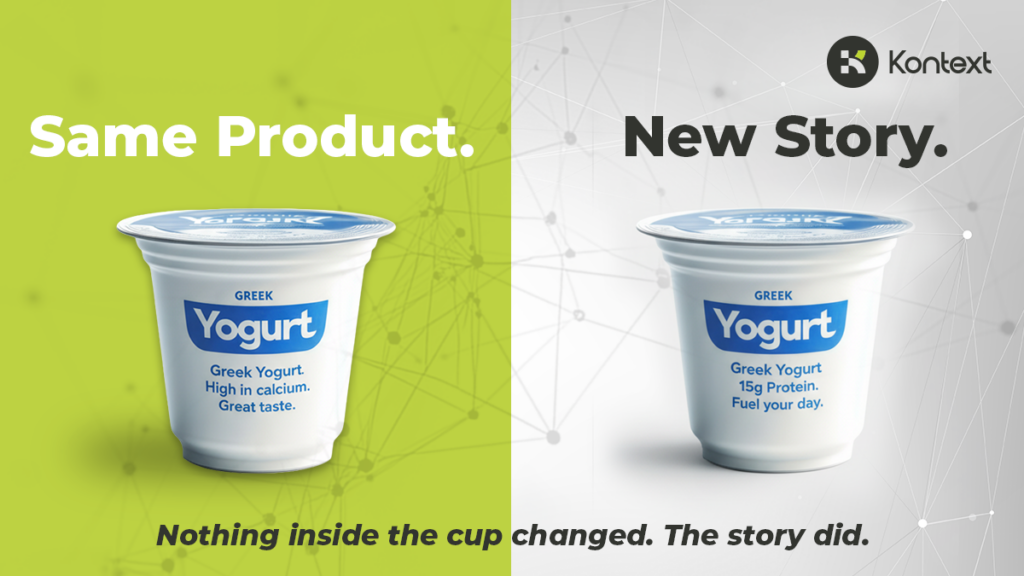
Greek yogurt has had high protein for years. What changed was not the product — it was the story. Oikos and others now lead with grams and strength cues in ads and sports tie-ins. Quick service chains like Chipotle print protein counts on bowls and cups. Nothing inside these products required a major overhaul. The story did.
Private-label grocery brands are following the same pattern. It is a low-investment, high-impact repositioning — and when it is honest, it works.
New Products Built Around the Trend
Then there are the products that would not exist without this moment. Protein cereal. Protein popcorn. Protein coffee. Some of these carve out real category positions. Others become short-lived experiments that confuse the brand more than they grow it.
The ones that survive share a common trait: they taste like the thing they are supposed to be first, and they fuel second. Social backlash against gritty textures and chalky aftertastes has already ended several launches early.
Protein, Fiber, and the Next Nutrient Wave
Here is where strategy gets interesting.
While protein still commands the most shelf space, fiber is quietly building momentum. Whole Foods’ trend forecast for 2026 predicts a surge in “fiber-forward” products. That lines up with a significant data point: more than 90 percent of women and 97 percent of men in the US do not hit their daily fiber targets according to federal dietary guidelines.
That gap is far larger than any measurable protein shortage. It is already inspiring prebiotic sodas, high-fiber snacks, and gut health positioning that mirrors what protein did five years ago.
| Nutrient | Actual Population Gap | Current Marketing Momentum |
|---|---|---|
| Protein | Generally adequate for most omnivores | Very high |
| Fiber | Most adults significantly deficient | Rising fast |
If you are planning three to five years ahead, this table should change how you think about your current product messaging investments.
What Protein Marketing Teaches You About Trends in General
If you work in marketing or sales, you have seen this arc before — just in different categories.
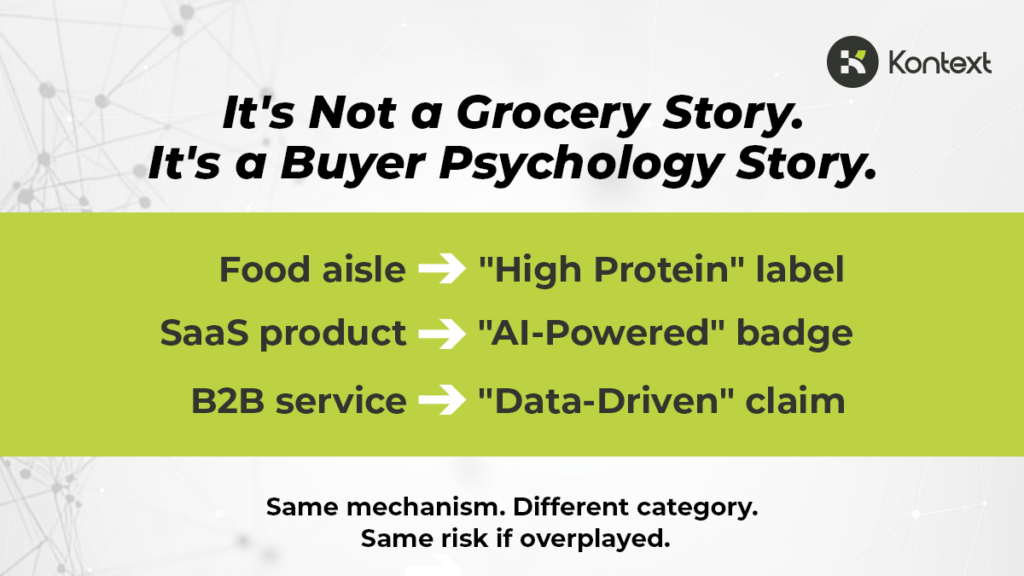
Early adopters ride the wave and establish strong positions. Late entrants struggle to stand out and sometimes cling to a keyword long after consumers have moved on. Food companies are running the same playbook now that SaaS companies ran with “AI-powered” claims — identifying terms that convert, then amplifying them until the market recalibrates.
The brands that win with trends are rarely the ones who jump at the loudest moment. They are the ones who see the underlying consumer psychology clearly, respond in a grounded way, and start preparing for the next shift before anyone else notices it coming.
How to Respond as a Marketer: 5 Practical Steps
1. Audit Your Actual Nutrition Story First
Start with facts. Look across your current product lineup and map which items are genuinely strong on protein, fiber, or healthy fats. A high-protein yogurt is honest positioning. A protein cookie that requires eating half the sleeve to reach the headline number is not.
Only after that honest audit do you decide which products deserve a protein-forward story.
2. Decide Where Protein Serves Your Brand, Not Just Your Ads
The temptation is to add a protein claim wherever possible and call it a strategy. That is short-sighted.
Ask a harder question: does making this product protein-forward align with why people love it today? Protein popcorn may resonate with fitness-focused buyers but feel off-brand for a product that built its audience on comfort and nostalgia.
The strongest brands apply this same discipline to every content and messaging trend. They say no to tactics that conflict with their core identity — even when those tactics are running hot.
3. Keep Claims Grounded and Specific
People are confused enough already. You help your brand more by speaking plainly than by hinting at edge science.
If a product covers 20 percent of daily protein needs for an average adult, say that. Give a frame that means something concrete. This kind of honest, specific language feels almost too calm compared with hype-filled packaging copy — but over time, it trains shoppers to see your label as a reliable signal in a noisy aisle.
4. Protect Taste
This feels obvious, but brands forget it repeatedly. If you optimize for macros at the expense of flavor or texture, people will try the product once and tell their network about the experience — in detail.
Make taste the proof point, not the afterthought. Show that your product development process does not just chase the current marketing trend. It holds the line on what actually satisfies.
5. Prepare for the Next Shift Before Everyone Else Does
Prebiotic sodas are already picking up lifestyle media coverage. High-fiber positioning is appearing in major retail trend roundups for 2026. The brands that treat protein as the only nutritional story worth telling right now risk looking behind the curve faster than they expect.
What Non-Food Brands Can Take From This
You might run marketing for a software company, a financial services firm, or a professional services brand and think this is purely a grocery aisle story. It is not.
The protein trend shows how a single, simple benefit claim becomes cultural shorthand for “this is the smart choice.” In SaaS, that label is “AI-powered.” In B2B services, it is “data-driven.” The psychological structure is identical.
Your buyers carry the same optimization mindset into their business purchasing decisions. They have the same label-driven habits. They scan your messaging the same way they scan a nutrition panel — looking for a fast, credible signal that confirms they are making the right choice.
Understanding how that signal works — and how to build it without overplaying it — is what separates brands that build durable authority from brands that spike and fade.
The Bottom Line
The protein marketing trend is not really about grams. It is about a culture chasing self-improvement that needs a simple lever to pull — and protein is that lever right now.
If you run marketing, your job is not to worship that lever or fight it. Your job is to read the data, listen to what your actual buyers are trying to accomplish, and build claims that hold up when the hype cycle eventually turns.
Do that consistently, and you can ride this wave while quietly building a brand that still makes sense when shoppers stop counting every gram.
Want to know if your current brand messaging is built to last beyond this trend cycle — or if it is more dependent on the current wave than you realize? Request a complimentary Marketing Audit from Kontext Group and we will show you exactly where you stand.