A masterclass in brand authenticity, real-time marketing, and why your “polished” corporate content might be quietly killing your audience connection.
A Fortune 500 CEO films himself eating a burger. It goes viral for all the wrong reasons. Within 48 hours, three rival brands had turned his awkward moment into free global press — and one of them did it without putting a single human on camera.
That’s not luck. That’s a deliberate, fast-moving marketing strategy. And if you lead marketing for a mid-market business, there are tactics in this story worth copying today.
The Bite That Broke the Internet
McDonald’s CEO Chris Kempczinski posted a promotional video to introduce the Big Arch, a new menu item. The goal was simple: show excitement, build buzz, generate earned media.
What happened instead became an instant case study in what not to do.
The clip showed Kempczinski taking a cautious, almost reluctant small bite — then referring to the food as “the product.” Not “this burger.” Not “this thing is incredible.” The product.
The internet noticed immediately. Not because people are cruel, but because audiences in 2026 are extraordinarily attuned to inauthenticity. When a person who runs a global fast food empire looks visibly uncomfortable eating their own food, the dissonance is jarring. It signals something broken between what a brand says and what it actually is.
The video didn’t fail because of poor production quality. It failed because it felt like a quarterly earnings call wearing a sesame seed bun.
How the Competition Turned One Mistake Into a Marketing Campaign
Here’s where the story gets interesting – and instructive.
Burger King’s marketing team moved within hours. They surfaced an old video of their own president taking a genuinely huge, enthusiastic bite. No script. No stiff corporate language. Just a person who clearly enjoys what they sell.
Wendy’s followed with fresh, messy bite videos of their own.
Freddy’s Frozen Custard filmed their CEO eating in his car like a regular customer – because he apparently does exactly that. No boardroom. No PR handler. A person in a car eating their own product.
Even Jack in the Box joined in, but with a twist: instead of a human executive, they leaned into their brand mascot. The message was the same (we’re unbothered, we’re confident, and we genuinely love what we do) but delivered entirely through personality rather than personnel.
The result? Multiple brands extracted massive earned media from a competitor’s stumble without spending a pound on paid distribution. They were ready because their brand personality was already defined, their content infrastructure was already in place, and their teams had permission to move fast.
The Real Strategic Lesson (And It’s Not “Be More Authentic”)
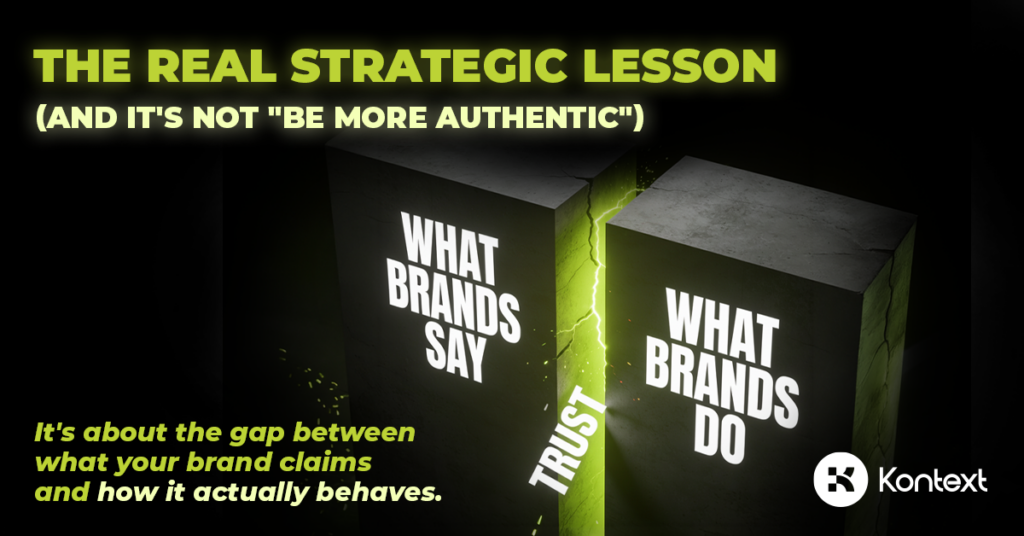
The superficial takeaway from this story is “be authentic.” That’s true but incomplete.
The deeper lesson is about the gap between brand positioning and brand behaviour.
McDonald’s has spent decades telling the world their food is delicious. In one 30-second clip, the body language and word choice of their CEO communicated something entirely different. He looked like a consultant eating the product of a client he’s never fully believed in.
That gap between what a brand claims and how its people actually act is where trust goes to die.
For mid-market business leaders, this shows up in subtler but equally damaging ways. It’s the LinkedIn post that’s been committee-approved until all the personality is gone. It’s the case study that talks about “solutions” instead of the actual problem you solved. It’s the website copy that describes your company as “innovative” while every competitor uses the exact same word.
Authenticity isn’t a content style. It’s the absence of a gap between what you believe and what you say.
Three Things the Winning Brands Did Right
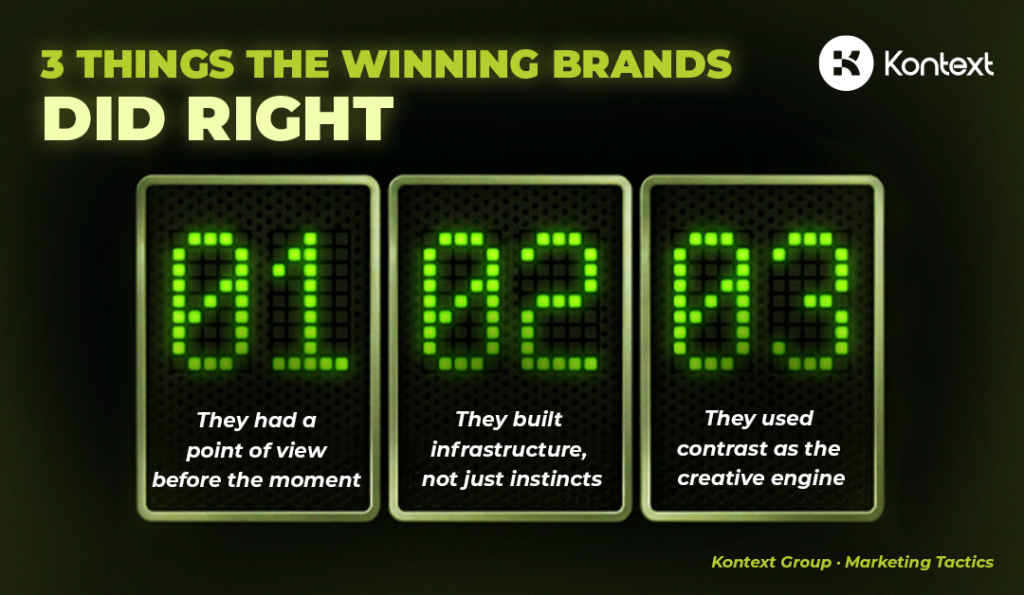
1. They had a defined point of view before the moment arrived.
Wendy’s didn’t scramble to figure out how to respond to the viral moment. They already knew their brand voice was direct, confident, and slightly irreverent. When the opportunity appeared, execution took minutes – not committee meetings.
If your brand doesn’t have a clear, written point of view that your whole team understands, you will always be slow when speed matters most.
2. They understood that real-time marketing requires infrastructure, not just instincts.
Speed in content doesn’t come from having fast people. It comes from having clear decision-making authority, pre-approved brand frameworks, and teams with permission to act without waiting for sign-off on every word.
Burger King didn’t need a three-day approval cycle because they’d already done the hard work of defining what their brand stands for and who can speak for it.
3. They used contrast as the creative engine.
The most effective responses weren’t just positive brand content. They were positioned directly against the awkward original. The contrast was the story. Your CEO eats like it’s a business obligation; ours eats because they love it.
Contrast-based marketing – where your position becomes clearest when placed next to the alternative – is one of the most powerful and underused tools in a mid-market marketer’s toolkit.
What This Means for Your Brand
You probably won’t get a viral gift-wrapped opportunity quite like this one. But the principles apply to every piece of content your business produces.
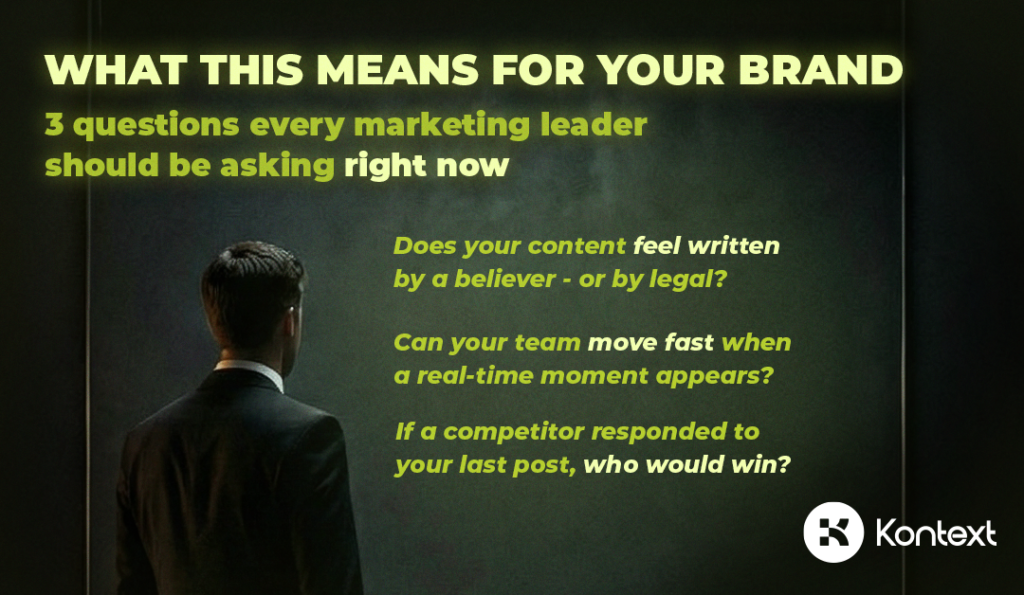
Ask yourself:
- If a competitor responded to your last piece of content with theirs, who would win and why?
- Does your content feel like it was written by someone who genuinely believes in what you do, or does it feel like legal-approved positioning?
- Do your team members have the clarity and permission to move fast when a real-time moment appears?
The brands that won in this story weren’t better resourced than McDonald’s. They were faster, more confident, and more human. That advantage is available to any business willing to build it deliberately.
The Cyborg Advantage in Real-Time Marketing
There’s a final layer to this story worth examining. Fast food chains operate some of the most sophisticated content machines in marketing (large teams, dedicated social strategists, pre-built creative systems). Most mid-market businesses can’t match that infrastructure with headcount alone.
But that’s exactly where AI-augmented marketing changes the equation.
The brands that responded quickly to the McDonald’s moment succeeded because they had:
- A pre-defined brand voice (strategy)
- Fast content production capacity (execution)
- Clear distribution channels already active (infrastructure)
AI tools can dramatically compress the time between strategic decision and published content. The speed advantage that Burger King and Wendy’s used to outmanoeuvre McDonald’s isn’t reserved for brands with 50-person social teams. It’s increasingly available to any business running smart, augmented content systems.
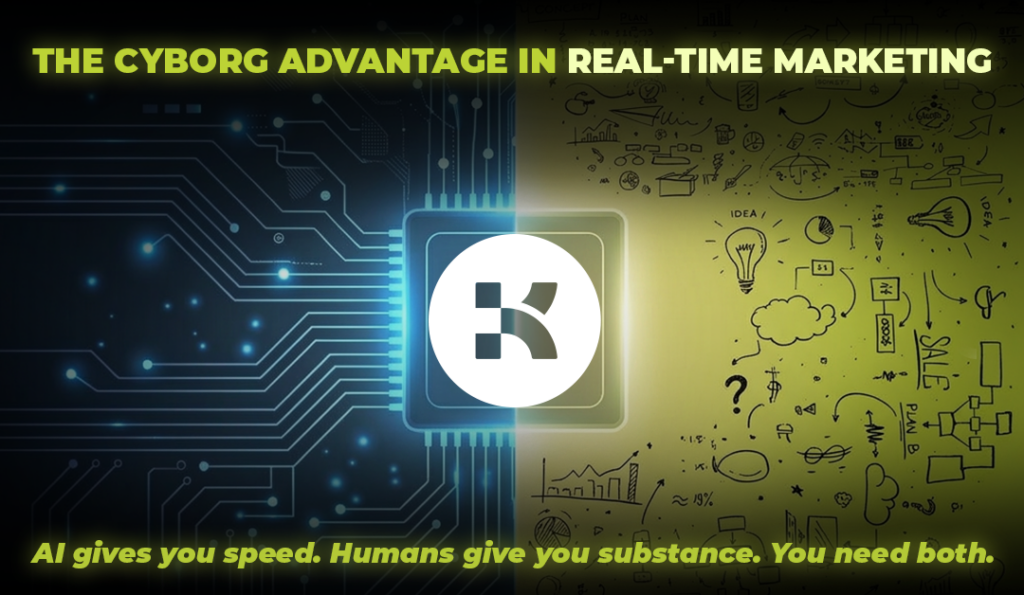
The catch? AI can produce content at speed. It cannot manufacture a genuine point of view. That still requires human strategic thinking – which is exactly why the businesses that win in real-time marketing combine both.
Speed without substance creates noise. Substance without speed creates missed opportunities. The goal is to have both running simultaneously, with humans setting direction and AI accelerating execution.
Ready to audit the gap between what your brand says and how it actually shows up?
Kontext Group works with mid-market businesses to build marketing systems that are fast, authentic, and built for the moments that actually move the needle.